
Do All Ragdolls Have Blue Eyes? Understanding Ragdoll Cat Eye Colors
One of the most recognizable and iconic features of the Ragdoll breed is their striking blue eyes. This signature trait is often what first draws people to the breed, giving Ragdolls their soft, stunning appearance. Because eye color is such a defining characteristic, many prospective owners naturally wonder whether all Ragdolls truly have blue eyes, or if they can also have green, gold or other colors. With so much variation seen in long-haired cats, this is a very common point of confusion.
In reality, eye color is more than just an aesthetic feature. Rather, it is an incredibly important part of the Ragdoll Breed Standard. True, purebred Ragdolls are defined not only by their temperament and coat pattern, but also by their distinctive blue eyes. In this article, we’ll explore what determines a Ragdoll’s eye color, what the official breed standards say and why misconceptions about Ragdoll eye colors are common. We’ll also look at the genetics behind their blue eyes and clarify how to identify a true Ragdoll.
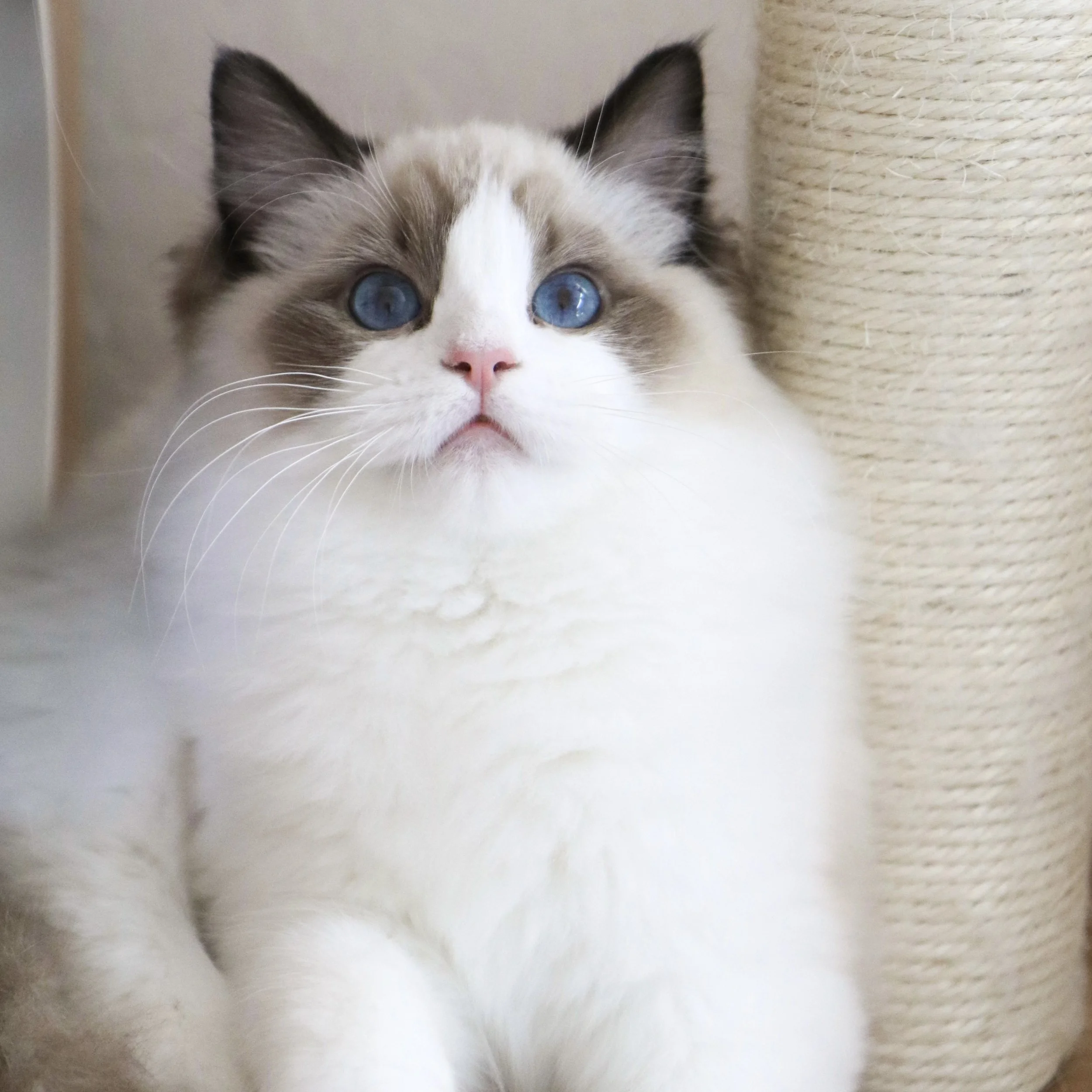
Seal Bicolor Ragdoll Cat with Vibrant, Deep Blue Eyes
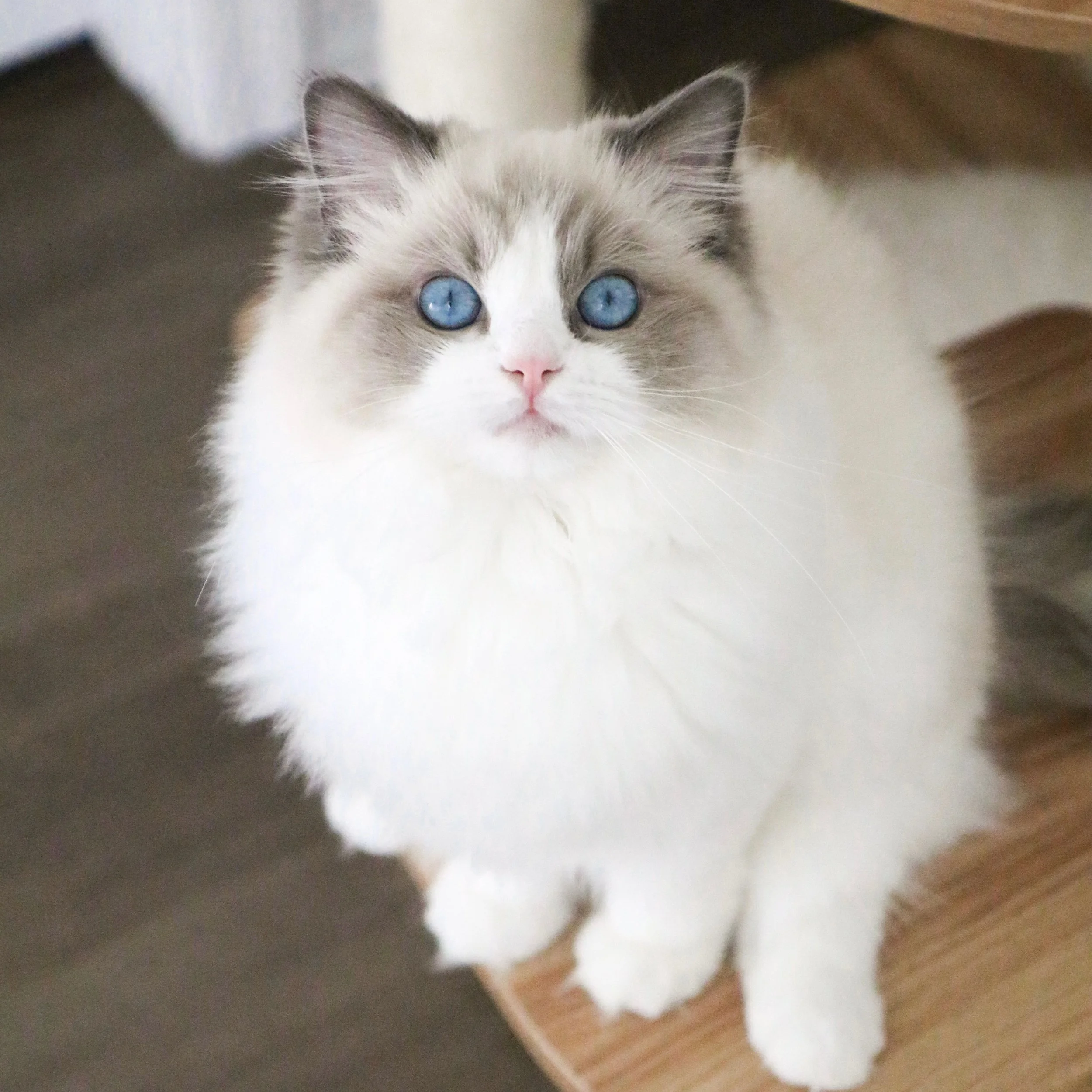
Blue Bicolor Ragdoll Cat with Vivid, Medium Blue Eyes
Do All Purebred Ragdolls Have Blue Eyes?
YES, all true Ragdolls have blue eyes. This is one of the defining characteristics of the breed and is required under the official breed standard. Blue eye color is not optional in traditional Ragdolls; it is a core trait used to identify correct breed type in both breeding programs and the show ring. Without blue eyes, a cat would not meet the standard definition of a Ragdoll.
Ragdoll kittens are Born Completely White, with blue eyes. While the shade may subtly shift as they grow, the eyes should remain blue throughout their life. It is common for the color to lighten or become richer as the kitten matures, especially during the first several months of development. Although the intensity of blue can vary (from lighter sky blue to deeper vibrant tones) the eye color itself should stay within the blue spectrum.
The 6 Levels of Ragdoll Blue Eyes
One interesting aspect of the Ragdoll’s blue eyes is that not every Ragdoll has the exact same shade of blue. Ragdoll eye color can range across six levels of intensity, from a light, icy blue at Level 1 to a deeper, vibrant blue at Level 6. These levels are a helpful way to describe how light, rich or intense a Ragdoll’s blue eye color appears.
Level 1 – Light Icy Blue: The palest shade on the scale, with a soft, delicate blue appearance that can look almost silvery in certain lighting.
Level 2 – Pale Blue: A slightly more noticeable blue than Level 1 while still maintaining a light appearance.
Level 3 – Clear Blue: A distinct medium-light blue with more visible color and depth while remaining relatively soft.
Level 4 – Medium Blue: A richer, more pronounced blue with noticeably greater depth and intensity than the lighter levels.
Level 5 – Rich Blue: A strong, saturated blue with plenty of depth and a striking appearance.
Level 6 – Deep Blue: The deepest and most saturated blue on the scale, creating an especially rich and intense eye color.
Keep in mind that a Ragdoll’s eye color can look different depending on lighting, surroundings, camera settings and reflections. Natural daylight is usually the best way to appreciate the true shade of blue.
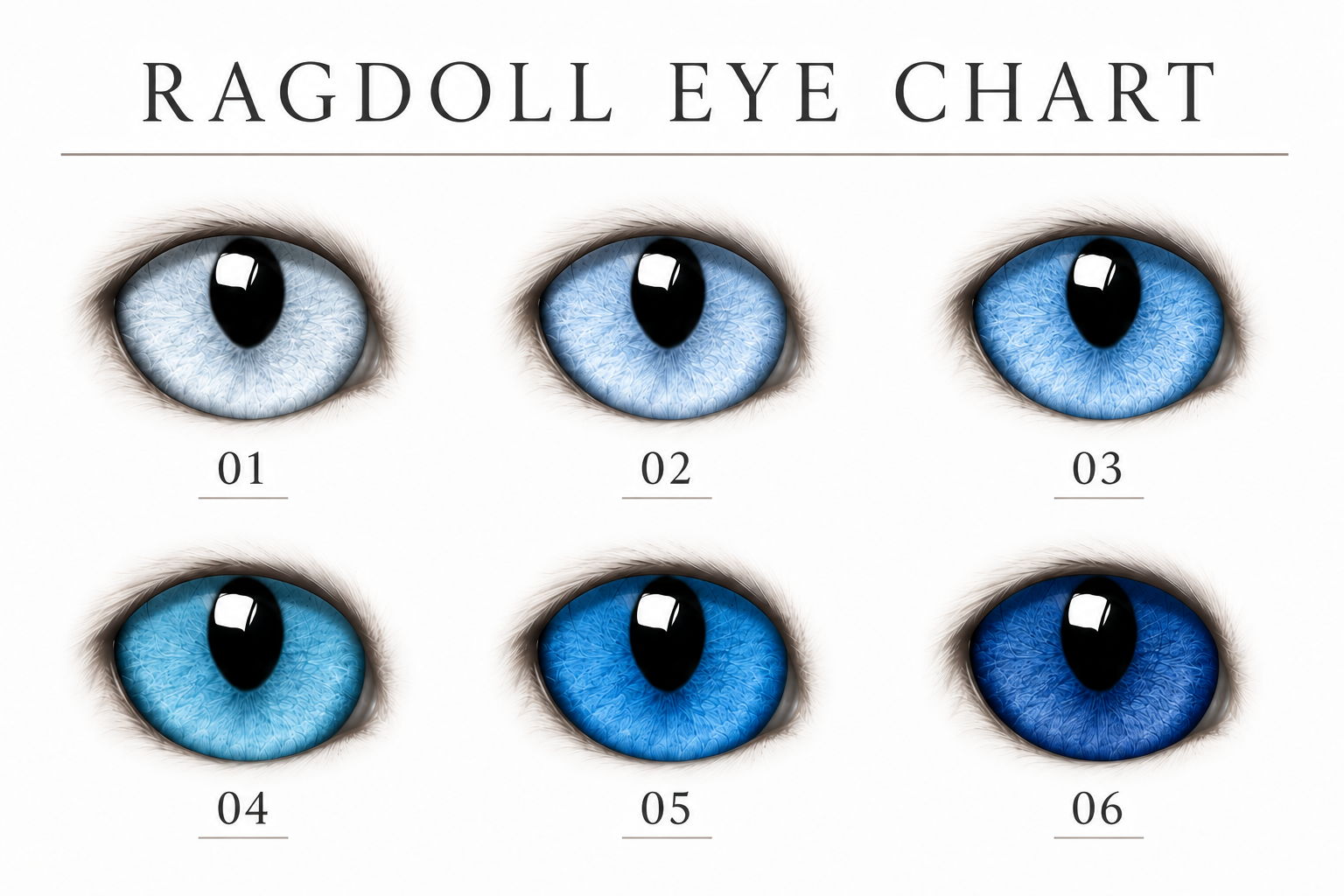
Ragdoll Eye Color Chart: Ragdoll cats are known for their beautiful blue eyes, which can range across six levels, from a light icy blue at Level 1 to a deep, saturated blue at Level 6.
What Does the Ragdoll Breed Standard Say?
A Breed Standard is a detailed set of guidelines that defines the ideal characteristics of a specific cat breed. These standards describe everything from Coat Color and Pattern to body structure, temperament and eye color. They are used by breeders to maintain consistency within the breed and by judges to evaluate cats in the show ring.
For Ragdolls, major cat registries outline very specific traits that define what a “true” Ragdoll should look like. Organizations such as the The International Cat Association (TICA) and the Cat Fanciers' Association (CFA) both describe the Ragdoll as having a large, semi-longhaired body type, a gentle temperament, pointed coloring and blue eyes only.
In the show ring, eye color is carefully evaluated as part of the overall breed standard. Judges look for clarity, depth and consistency of blue, as this is one of the most defining and immediately recognizable features of the breed. Because of this, eye color is not only a cosmetic trait. It is one of the key characteristics that helps distinguish Ragdolls from other similar-looking breeds and plays an important role in maintaining the integrity of the breed standard.
Why Do Ragdolls Have Blue Eyes?
The blue eye color in Ragdolls is directly linked to the same genetics that creates their signature pointed coat pattern. This comes down to the Colorpoint Gene, which affects how pigment is produced and distributed throughout the body. In colorpoint cats, pigment production is temperature-sensitive and reduced in the cooler extremities of the body. This results in darker coloration on the ears, face, legs and tail, while the warmer central body remains lighter. At the same time, this reduction in pigment also affects the eyes, resulting in the striking blue coloration that defines the breed.
Because of this shared genetic pathway, the same mechanism responsible for the Ragdoll’s pointed coat is also responsible for their blue eyes. In other words, the Ragdoll’s eye color and coat pattern are genetically linked traits rather than separate characteristics. It’s also important to note that blue eyes in Ragdolls are not caused by albinism, which is a Ragdoll Myth. While albinism can also result in reduced pigment and blue or very light eyes, Ragdolls do not carry the albino gene. Instead, their eye color is a direct result of the colorpoint pattern genetics, making it a distinct and breed-specific trait rather than a lack of pigment production across the entire body.
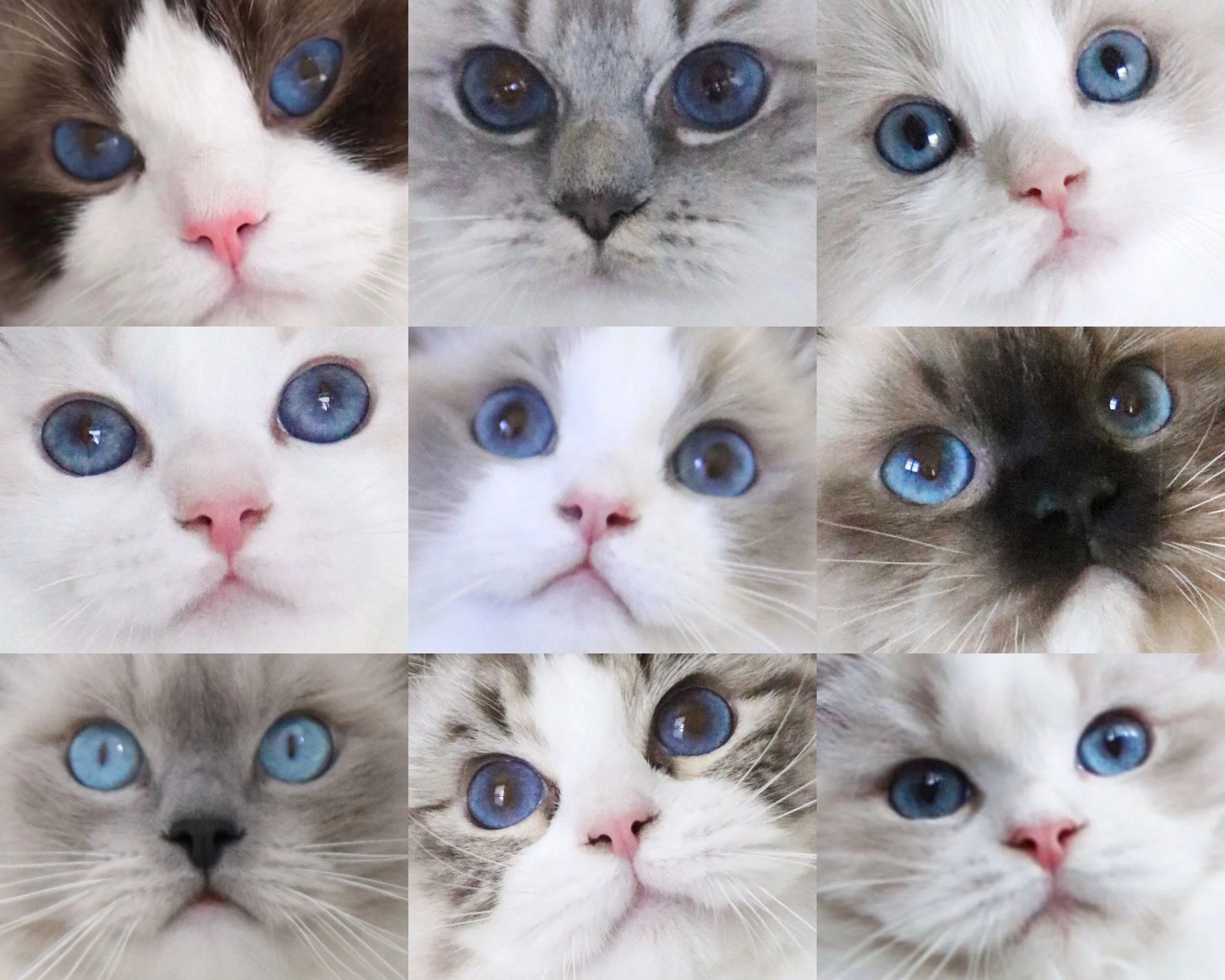
Ragdoll Eye Color Examples: Nine Ragdoll cats at Pastel Ragdolls showing the natural variation in blue eye color.
Do Ragdoll Kittens’ Eye Color Change?
All true Ragdoll kittens are born with blue eyes. This is one of the earliest and most recognizable traits of the breed and is present from the moment their eyes open. As Ragdoll kittens grow, the shade of blue may gradually change. During the first several months of life, it is common for the eye color to lighten or become more defined. What may start as a deep, navy blue can develop into a brighter, more vivid tone as the kitten matures.
Most Ragdolls will reach their mature eye color by around one year of age, although subtle changes can continue slightly beyond that as they fully develop into adulthood. Adult Ragdolls can vary in eye color intensity. Some may retain a lighter sky-blue shade, while others develop deep sapphire-blue eyes. Although the intensity can differ from Ragdoll to Ragdoll, the eyes should remain within the blue spectrum, maintaining one of the breed’s most distinctive and defining features.
Can Ragdolls Have Green, Gold, or Odd-Colored Eyes?
There are many misconceptions online about Ragdoll eye color, especially when it comes to green, gold or other non-blue shades. However, according to the written breed standard, these eye colors are not part of the Ragdoll breed.
To clarify:
Green eyes are not accepted in purebred Ragdolls.
Gold or copper eyes are not part of the Ragdoll Breed Standard.
Sometimes blue Ragdoll eyes can have a hint of aqua in them, depending on the shade, but true blue is preferred.
Odd eyes (one blue eye and one eye of another color) are not characteristic of Ragdolls.
Because blue eyes are a defining feature of the breed, any deviation from blue would not meet the standard for a traditional Ragdoll.
Despite this, it is not uncommon for people to encounter cats labeled as “Ragdolls” that have different eye colors.
This often happens for a few reasons:
Mixed-Breed Cats Being Advertised as Ragdolls: Some long-haired, colorpoint-type cats may resemble Ragdolls but do not come from documented purebred lines.
Mink, Sepia or Solid Cherubims: These cats may have aqua, green, gold or copper eye colors due to different pigment expression. While they are sometimes grouped under the “Ragdoll” umbrella, they are not true Ragdolls since they do not meet the breed standard.
Long-Haired Colorpoint Cats mistaken for Ragdolls: Other breeds or domestic cats can share similar coat patterns, leading to confusion in identification.
Inaccurate Online Listings or Informal Breeding Practices: Without proper pedigree verification, eye color and breed labeling may not always align with official standards.
For this reason, eye color can be a helpful visual clue, but it should always be considered alongside pedigree and breeder reputation when identifying a true Ragdoll.
What About Mink, Sepia and Solid?
This is a topic that often causes confusion, especially because these cats are frequently marketed under the “Ragdoll” name despite having different physical traits and genetic backgrounds. Understanding the differences helps clarify why eye color plays such an important role in defining the traditional breed.
Traditional Ragdolls have vivid blue eyes, which are a defining feature of the breed standard.
Mink Cherubims often have aqua-colored eyes, along with richer and slightly darker coat pigmentation.
Sepia Cherubims often have greenish-gold or gold-toned eyes and less contrast in point coloration.
Solid-Colored Cherubims can display a wider range of eye colors depending on their genetics, as they do not carry the colorpoint gene that produces blue eyes.
Under traditional show standards set by organizations such as the Cat Fanciers' Association and The International Cat Association, the classic Ragdoll is defined specifically by its pointed coat pattern and blue eyes only. Because of this, Mink, Sepia, and Solid varieties are not considered part of the traditional Ragdoll category and cannot be shown as a “Ragdoll”, even though they may share ancestry.
Why Eye Color Matters When Choosing a Breeder
While eye color is one of the most recognizable and beautiful traits of the Ragdoll breed, it should never be the only factor considered when choosing a breeder. A truly responsible breeding program goes far beyond appearance and focuses on health and temperament. Choosing a Reputable Breeder starts with transparency and trust. Proper pedigrees confirm that a kitten comes from documented, purebred Ragdoll lines that meet established breed standards, including the characteristic blue eyes.
It’s also important to be cautious of misleading advertisements. Cats labeled as “Ragdolls” may not always come from registered or ethical breeding programs, especially if eye color, coat type or lineage information is unclear or inconsistent. Eye color alone is not enough to confirm breed authenticity.
Prospective owners should look at the full picture of responsible breeding practices, including:
Comprehensive health testing for genetic conditions.
Focus on stable, affectionate and social temperaments.
Clean, ethical and transparent breeding environments.
Registration with recognized cat associations and documented lineage.
Eye color should complement these factors. While the iconic blue eyes are a hallmark of the traditional Ragdoll, they are only one piece of what defines a healthy, well-bred kitten. A reputable breeder prioritizes the overall wellbeing of the cat above all else, ensuring that both beauty and health are preserved for future generations.
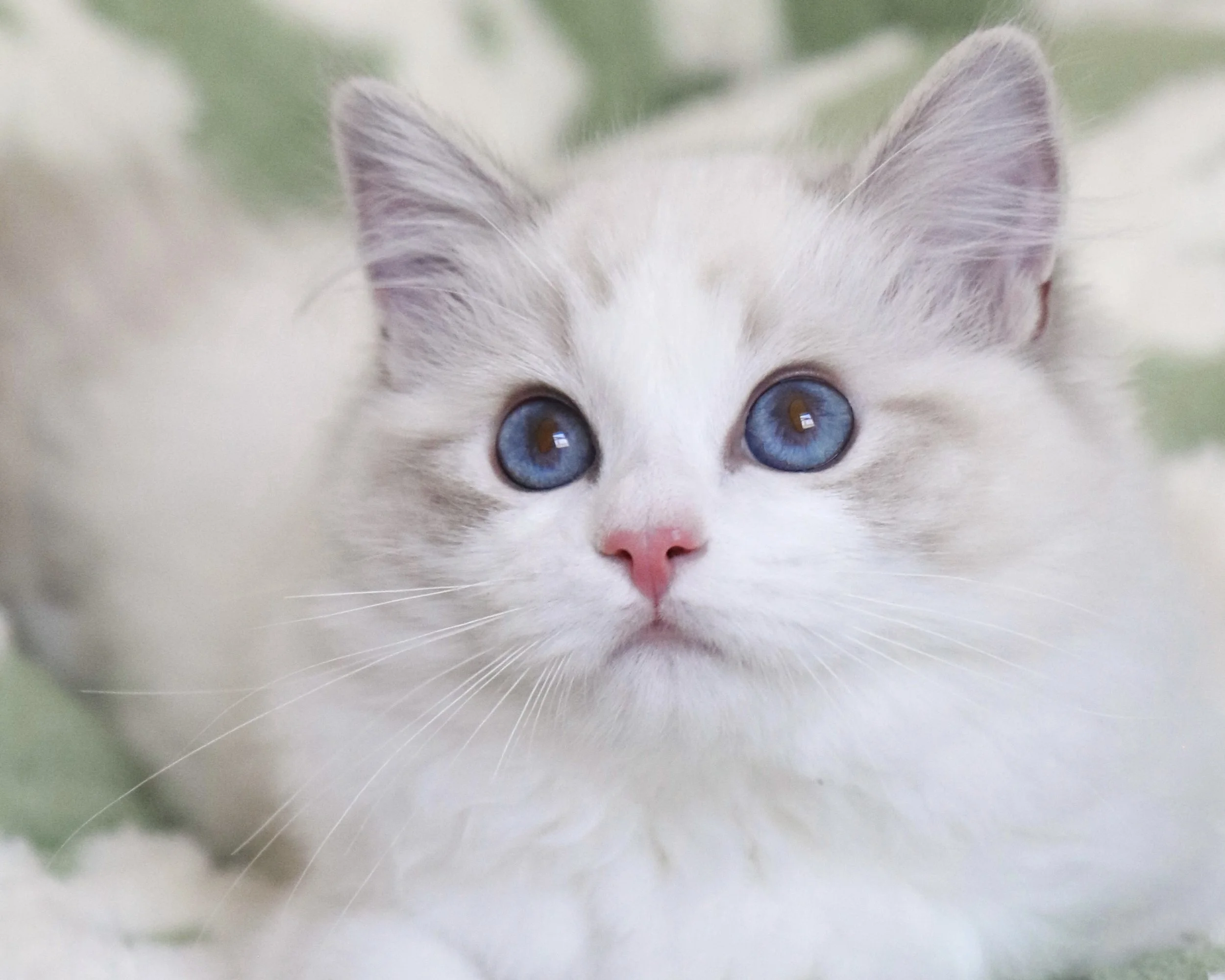
The Beautiful Blue Eyes That Define the Breed
The striking blue eyes of the Ragdoll are one of the breed’s most recognizable and beloved traits, often capturing attention long before anything else is noticed about them. While the shade of blue can vary from soft sky tones to deep sapphire, true traditional Ragdolls retain blue eyes throughout their entire life. This consistency is part of what defines the breed and helps distinguish them within established breed standards.
When browsing Ragdoll Kittens for Sale, it’s important to look beyond appearance alone and prioritize breeders who focus on health, temperament and adherence to recognized breed standards. Responsible breeding ensures that these cats not only look the part but also maintain the gentle, affectionate nature the breed is known for. Ultimately, the iconic blue eyes are just one piece of what makes Ragdolls so special!