
Why Ragdolls Are Born White: The Fascinating Genetics of Colorpoint Cats
All traditional Ragdoll kittens are born completely white, regardless of the color and pattern they will eventually develop. Whether a Ragdoll kitten grows into a seal mitted, blue lynx point or even a red bicolor, their life always begins with a soft, snowy coat. This transformation happens gradually over time and is driven by a unique, temperature-sensitive gene that controls how and where pigment develops in the fur. As the Ragdoll kitten grows and their body temperature varies across different areas, their color slowly begins to appear.
For new Ragdoll owners, this can sometimes be surprising! However, it is entirely normal and one of the breed’s most distinctive and incredible traits. Behind the Ragdoll’s color change is a surprising piece of genetics. It’s one that explains not only why Ragdolls are born white, but how their signature colorpoint pattern develops with such precision.
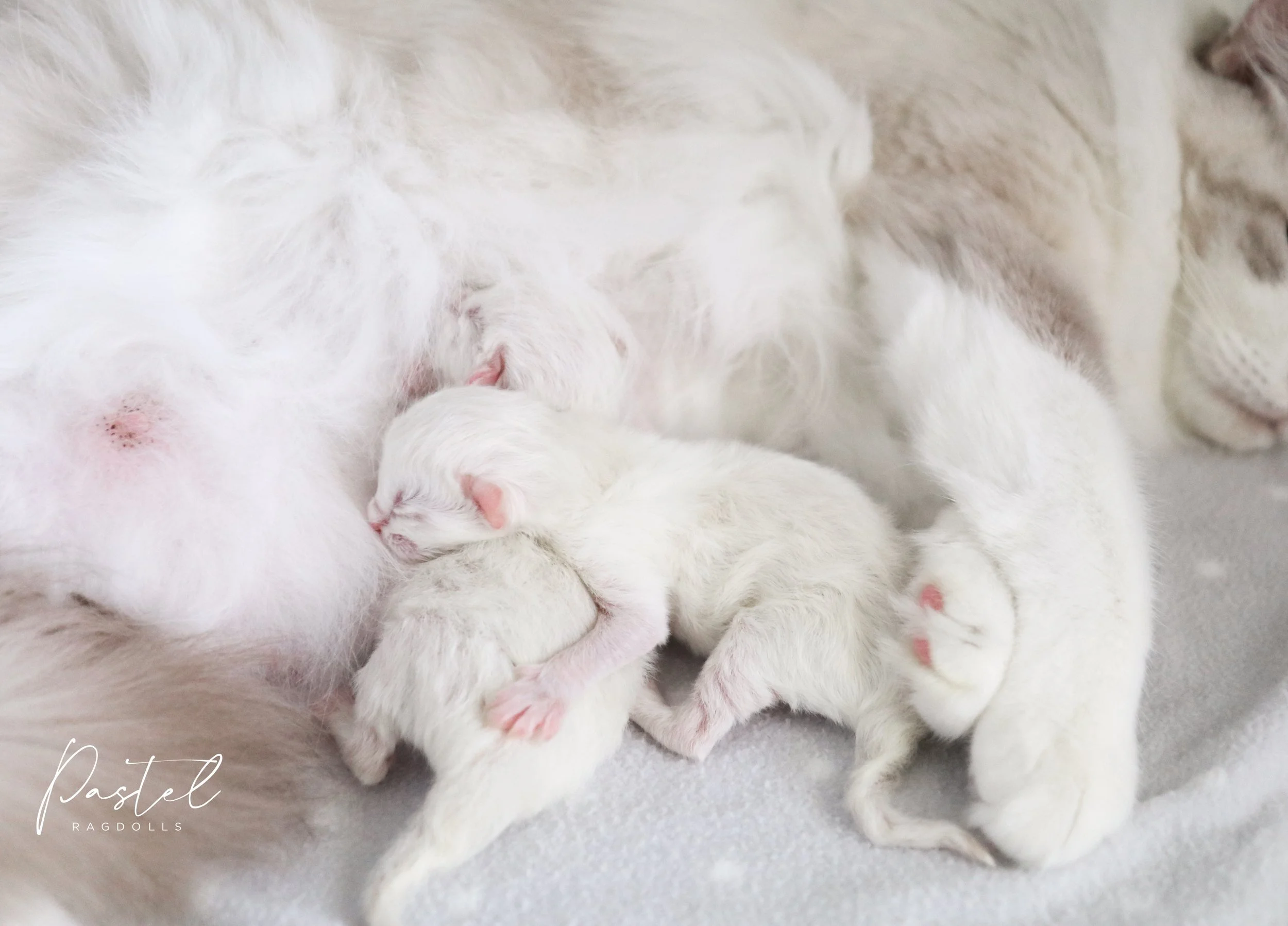
White Newborn Ragdoll Kittens
What Does “Colorpoint” Mean?
The term “colorpoint” refers to a specific coat pattern where a cat’s coloration is concentrated on certain areas of the body. In Colorpoint Cats, the contrast between darker “points” and a lighter body creates the soft, signature look Ragdolls are known for.
Colorpoint cats typically display:
Darker coloration on the ears, paws and face (dependent on their underlying pattern)
A richly colored tail
A lighter, contrasting body
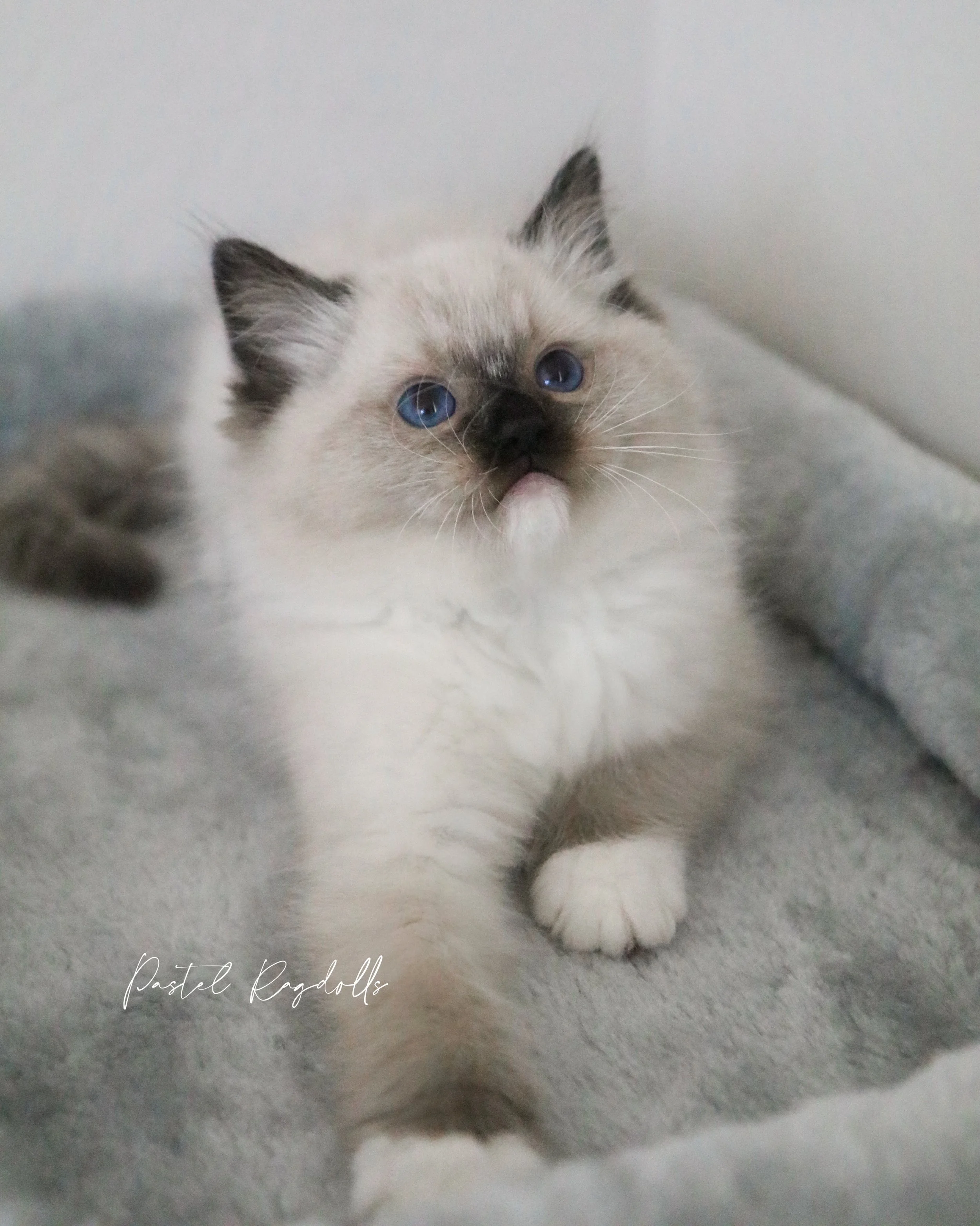
Seal Mitted Ragdoll Kitten
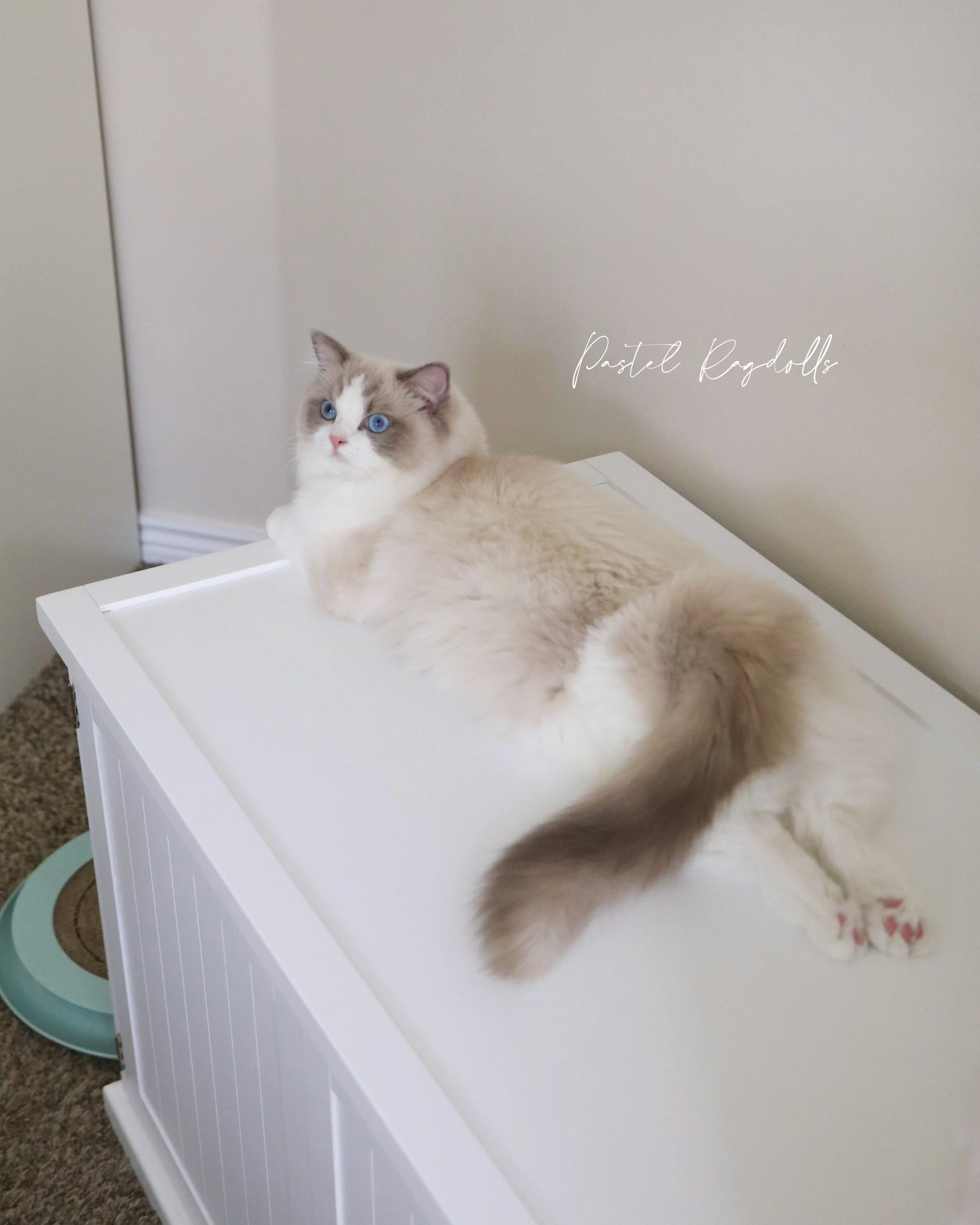
Blue Bicolor Ragdoll Cat
The colorpoint pattern isn’t unique to Ragdolls. It’s also seen in other breeds such as the Siamese, Birman and Himalayan, all of which share similar genetic traits that influence how their coats develop.
At the root of this pattern is a specific gene controlling pigment production. Rather than distributing color evenly across the entire body, this gene limits where pigment can form, setting the stage for the beautiful contrast that defines colorpoint cats.
Why Are Ragdoll Kittens Born White?
Ragdoll Kittens are born white because of the environment they develop in before birth. Inside the womb, temperatures are consistently warm and this plays a direct role in how their coat color forms. The reason for this lies in the colorpoint pattern itself, which is controlled by a heat-sensitive gene that affects pigment production. In simple terms, this gene “turns off” color in warmer conditions and only allows pigment to develop in cooler areas.
Because the entire body of a kitten in the womb is kept warm, pigment doesn’t develop at all during this stage. As a result, Ragdoll kittens are born completely white.
It’s important to note that this is not albinism. Ragdolls do produce pigment, but in a very specific and controlled way. Rather than lacking color entirely, they have a form of partial pigment restriction that responds to temperature, allowing their signature points to gradually appear after birth as different areas of the body begin to cool.
The Science Behind It: Temperature-Sensitive Genetics
Now let’s get into the science! The colorpoint pattern comes from a mutation affecting an enzyme called tyrosinase, which is responsible for producing melanin, the pigment that gives a cat’s coat its color. In Ragdolls and other colorpoint cats, this enzyme behaves differently. It becomes temperature-sensitive, meaning it only functions in cooler areas of the body.
In simple terms:
In warmer areas, the enzyme is inactive → no pigment is produced
In cooler areas, the enzyme becomes active → pigment develops
This is why color doesn’t appear evenly across the coat. The cooler parts of the body (like the ears, face, paws and tail) develop pigment first, while the warmer torso stays lighter. Over time, this temperature-driven process creates the soft contrast and signature pattern that makes Ragdolls so special.
How Ragdoll Color Develops Over Time
One of the most fascinating aspects of Ragdolls is watching their color slowly emerge. Unlike many other breeds, their coat isn’t fully developed at birth and it evolves gradually as they grow.
Here’s a general timeline of how that transformation happens:
At Birth
Born completely white
1–2 Weeks
Subtle color begins to appear, beginning on the ears, tail and nose
4–6 Weeks
Points become more noticeable and the facial mask starts to form
8–12 Weeks
A clear color pattern is now visible
1–3 Years
Full color development is reached and the body may continue to slightly darken over time
It’s important to remember that every kitten develops a little differently. Final color can take time to fully emerge, so patience is key as your Ragdoll grows into their unique pattern!
Why Different Colors Appear (Seal, Blue, Red, Chocolate, Lilac, etc.)
While the colorpoint gene determines where pigment shows up on a Ragdoll’s coat, it doesn’t determine which color appears. Instead, other genes work alongside it to control the actual shade and intensity of the pigment.
In simple terms, the colorpoint gene acts like a “map,” while other genetics fill in the “paint.” This is why Ragdolls can share the same pattern but look different in color.
Here’s a breakdown of the most common Ragdoll Point Colors:
Seal Ragdoll = A deep brown that can appear almost black in cooler areas
Blue Ragdoll = A diluted version of seal, resulting in soft slate-grey tones
Red (Flame) Ragdoll = A warm orange-ginger tone caused by the orange pigment gene
Cream Ragdoll = A diluted version of red, resulting in a soft, pale peach tone
Chocolate Ragdoll = A lighter, warmer brown with a softer overall appearance
Lilac Ragdoll = A very pale, frosty gray with a subtle pinkish undertone
Some Ragdolls can also express more complex combinations:
Tortie (Tortoiseshell) Ragdoll = A mix of red and black-based colors, creating a mottled or blended pattern in the points. Tortie Ragdolls are almost always female due to how the orange gene is inherited
Lynx (Tabby) Ragdoll = Lynx Ragdolls have faint striping or tabby markings within the points
In addition to color variation, pattern genes can further modify appearance:
Bicolor Ragdoll = Features white markings, often with an inverted “V” on the face and varying amounts of white across the body
Colorpoint Ragdoll = Dark points with no white markings on the body
Mitted Ragdoll = Similar to colorpoint but with white “mittens” on the paws and often a white chin and a white belly stripe
Together, these genetic layers create the wide range of beautiful and distinct Ragdoll appearances seen within the breed.
Why Some Ragdolls Darken More Than Others
Even though all Ragdolls follow the same colorpoint principles, the intensity of their coat color can vary from cat to cat.
A few key factors influence how much a Ragdoll darkens over time:
Genetics
Each kitten inherits a unique combination of color and dilution genes, which affects how strong or soft their final coat color will be. Even within the same litter, siblings can mature into slightly different shades.Environment (Temperature Exposure)
Because colorpoint expression is temperature-sensitive, cats living in cooler environments may develop slightly darker coats. Cooler air allows more pigment production in the fur, especially in the points.Age
Ragdolls naturally darken as they mature. Their points continue to deepen gradually over the first few years of life and some cats will continue to subtly change well into adulthood.
The most important takeaway is that variation is completely normal and expected. No two Ragdolls develop exactly the same and these subtle differences are part of what makes each cat uniquely beautiful.
Common Misconceptions About Colorpoint Cats
Because Ragdolls change so much as they grow, there are a few common misunderstandings about how their coat develops. In reality, what often looks surprising is simply part of normal genetic expression.
“Color changes mean something is wrong”
→ The gradual development of color is a healthy, expected process in Ragdolls. It is simply the result of temperature-sensitive pigment production activating over time.
“White kittens mean the cat won’t have strong color”
→ In reality, all colorpoint kittens are born white. This is completely normal and has nothing to do with how dark or rich their final color will be.
“Ragdolls change color suddenly”
→ Color development is actually slow and continuous. While changes may seem more noticeable at certain stages, the process is gradual and ongoing throughout the first years of life.
What This Means for Ragdoll Owners
Bringing Home a Ragdoll Kitten often comes with the fun surprise of watching their appearance develop over time. The intensity of their points, the definition of their mask and even the overall depth of color can all continue to develop well beyond the early weeks.
This transformation is one of the most special parts of the breed. Watching a Ragdoll “come into their color” is a slow and beautiful process. Many owners find it deeply rewarding to see their cat’s unique pattern emerge over time.
From a breeder’s perspective, early coloring can offer a general idea of what a kitten may become, but it does not always perfectly predict their final shade. Genetics, development rate and natural variation all play a role in how each Ragdoll matures. In the end, every kitten develops in their own way and that individuality is part of what makes Ragdolls so captivating.
When to Be Concerned (If Ever)
The gradual change in a Ragdoll’s coat color is completely normal and simply part of how the breed develops. The shifting shades and deepening points are all expected stages of healthy growth. It’s important to remember that coat development in colorpoint cats is not a health indicator. Changes in color alone are not a sign of illness, imbalance or poor condition.
However, there are a few rare situations where it’s worth paying closer attention to the coat and skin itself:
Sudden or unexplained Shedding and hair loss
Patchy or uneven areas that look irritated or inflamed
Visible skin issues such as redness, scabs or persistent scratching
If any of these signs appear, it’s best to consult a veterinarian to rule out underlying skin conditions or other health concerns. Outside of these exceptions, coat color changes in Ragdolls are entirely expected and they’re part of what makes watching them grow so fascinating!
Ragdolls: Living Works of Art
Ragdolls are born white because of their unique temperature-sensitive genetics, which temporarily prevent pigment from forming in the warm environment of the womb. As they grow and their bodies begin to experience different temperature zones, their color slowly starts to appear. This ongoing development is what makes the breed so captivating. Their coats don’t stay the same. Rather, they evolve over time, revealing deeper points, richer contrast and their full pattern as they mature.
Each Ragdoll Kitten’s transformation is completely individual, shaped by genetics, development and subtle environmental influences. No two Ragdolls ever mature in exactly the same way. Watching their color emerge is one of the most special parts of living with this breed and a reminder that Ragdolls truly are living works of art, unfolding right before our eyes.