
The Truth About Mink, Sepia and Solid Ragdolls
If you spend any time in the Ragdoll world, you may eventually hear the terms mink, sepia and solid Ragdolls. These cats are often advertised under the Ragdoll name, frequently sold at high prices and are sometimes described as “rare,” “special” or “more colorful.” This has created years of confusion, frustration and controversy within the breed.
As a preservation breeder of traditional/standard Ragdolls, I believe it is important to separate emotion and personal preference from breed standards and registries. This article is not about disliking mink, sepia or solid Ragdolls. Many of them make wonderful companions. However, they are not Ragdolls by definition, cannot be shown as “Ragdolls” in any major cat organization and are technically their own category of Cherubim.
Understanding why these cats are not true Ragdolls requires a look at genetics, the Ragdoll Breed Standard and the history behind one of the most debated topics in the cat fancy.
What Makes a Ragdoll a Ragdoll?
Ragdolls are a pointed breed, meaning they must be homozygous for the colorpoint gene (cs/cs). This gene is responsible for the classic Ragdoll traits:
Blue eyes (always blue)
Lighter body color with darker points on the ears, face, legs and tail
Slow-developing color that deepens with age
In every major cat registry that recognizes Ragdolls, this colorpoint expression is not optional, it is fundamental to the breed.
Traditional Ragdolls are limited to specific Ragdoll Patterns and Colors:
Bicolor, mitted and colorpoint patterns
Seal, blue, chocolate, lilac, red, cream and tortie
If a cat does not meet these criteria, it does not meet the breed standard, regardless of lineage or appearance.
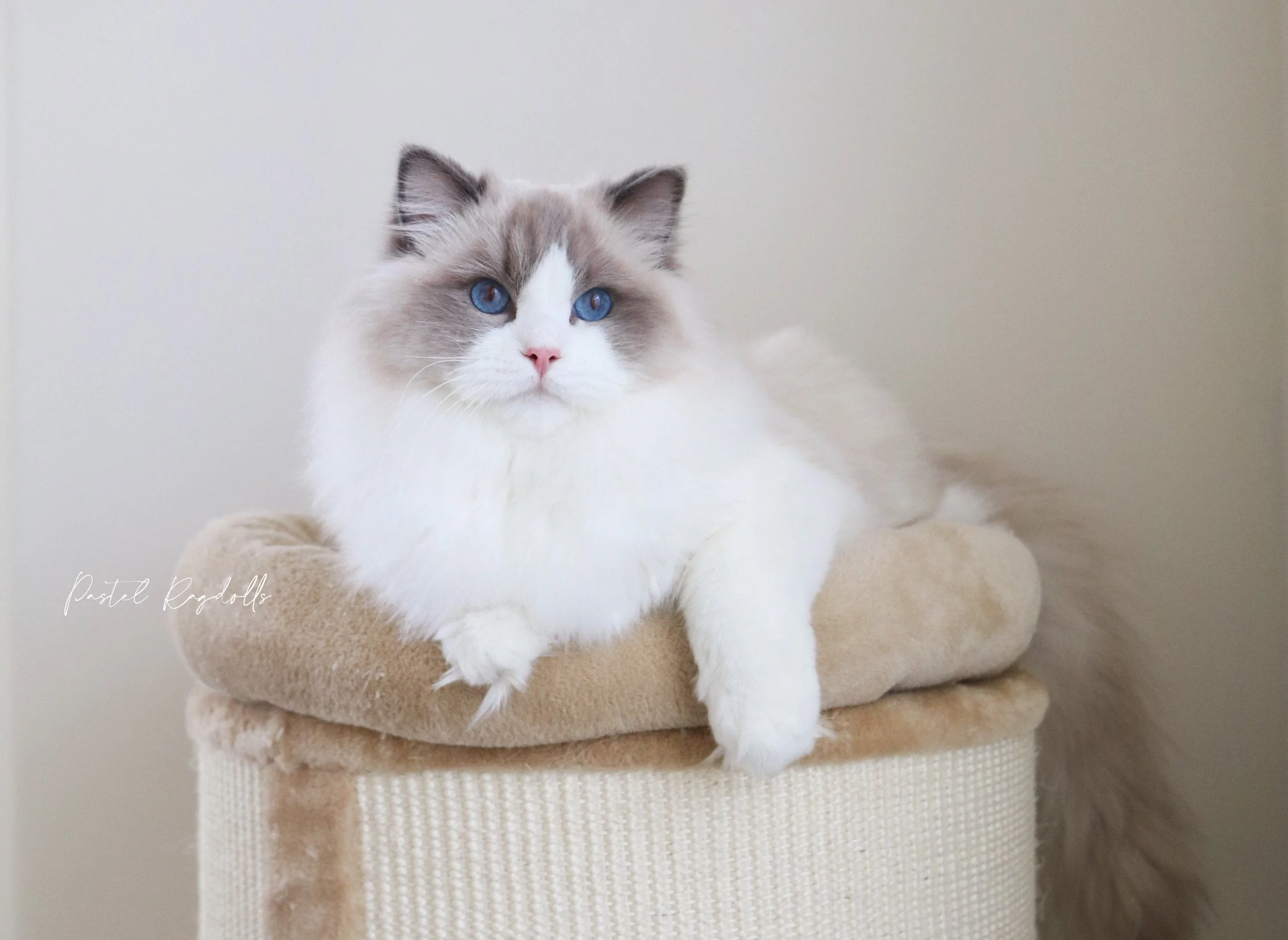
A Ragdoll is a semi-long haired, blue eyed pointed cat.
What Are Mink, Sepia and Solid?
Mink, sepia and solid cats differ genetically from traditional Ragdolls due to how they inherit color genes. While these cats may descend from Ragdoll lines, their genetics place them outside the Ragdoll breed standard.
Mink
Mink cats carry one copy of the colorpoint gene and one copy of the sepia gene (cs/cb). This results in:
Darker, more even body color
Aqua or greenish-blue eyes (not true blue)
Reduced contrast between body and points
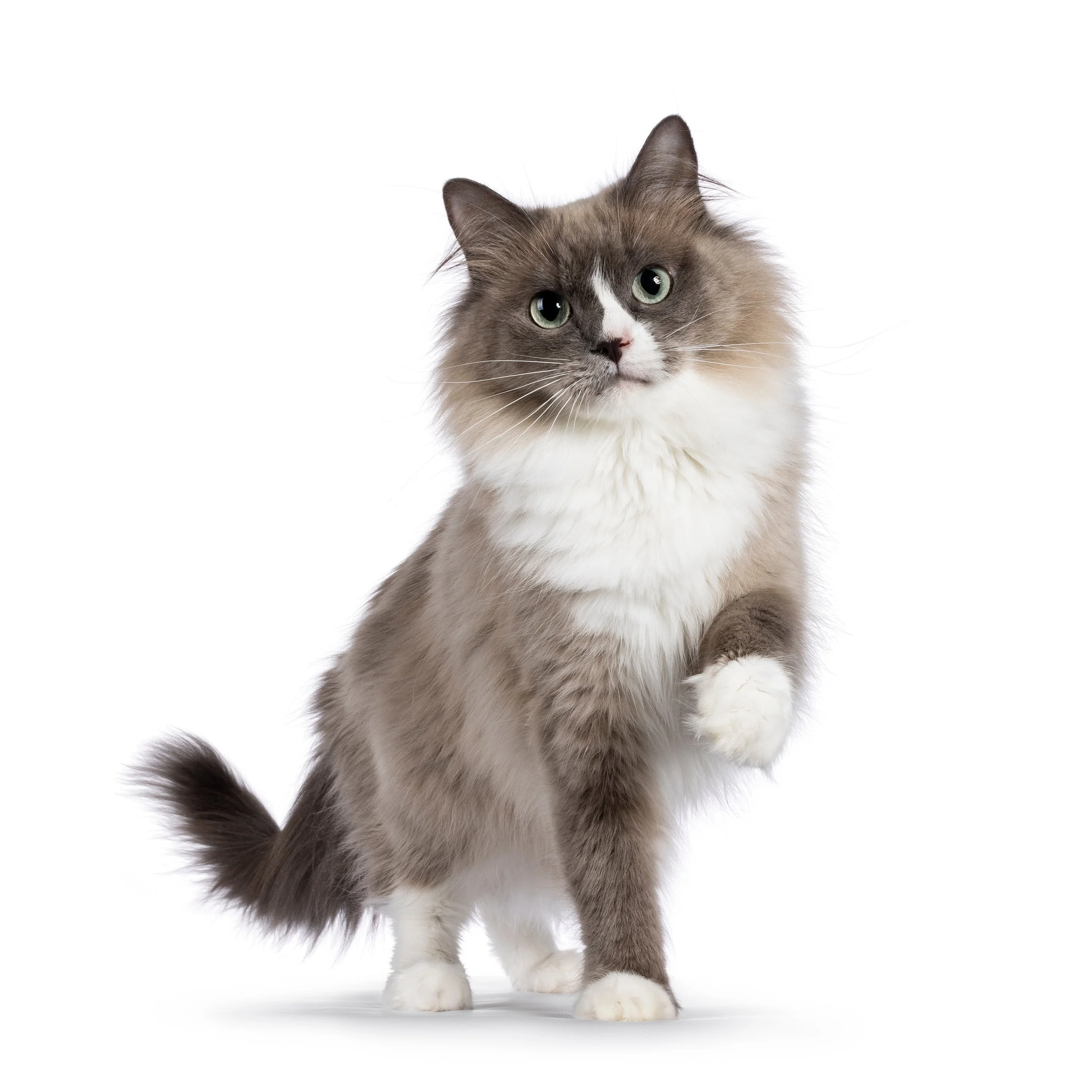
Mink Cherubim with Green Eyes
Sepia
Sepia cats carry two copies of the sepia gene (cb/cb), which produces:
Rich, dark coloration across the entire body
Minimal or no point contrast
Green, gold or yellow eyes
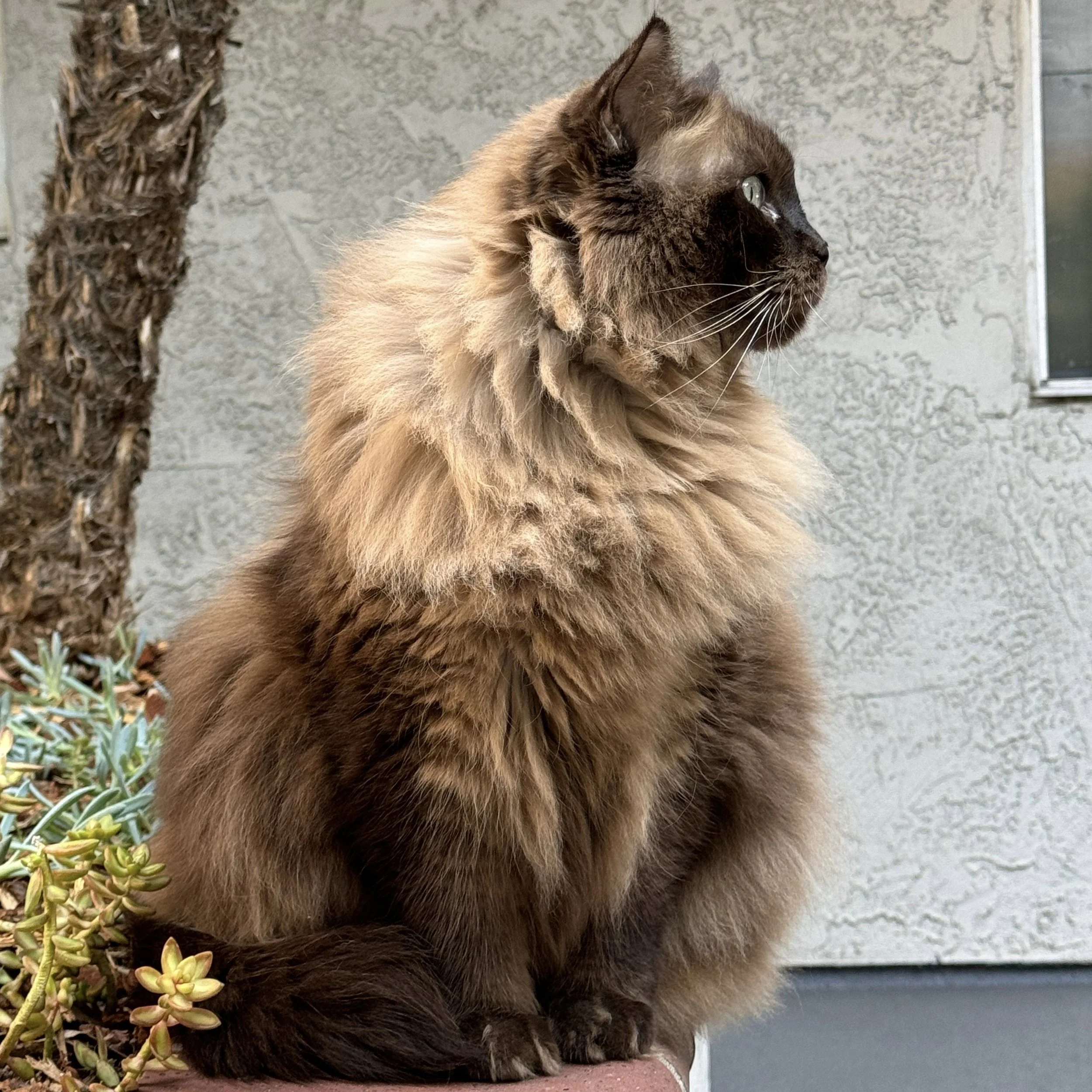
Sepia Cherubim with Green Eyes
Solid
Solid cats do not carry the colorpoint gene at all (C/C or C/-). They may be black, blue, chocolate, lilac or other solid colors, with no points and no blue eyes.
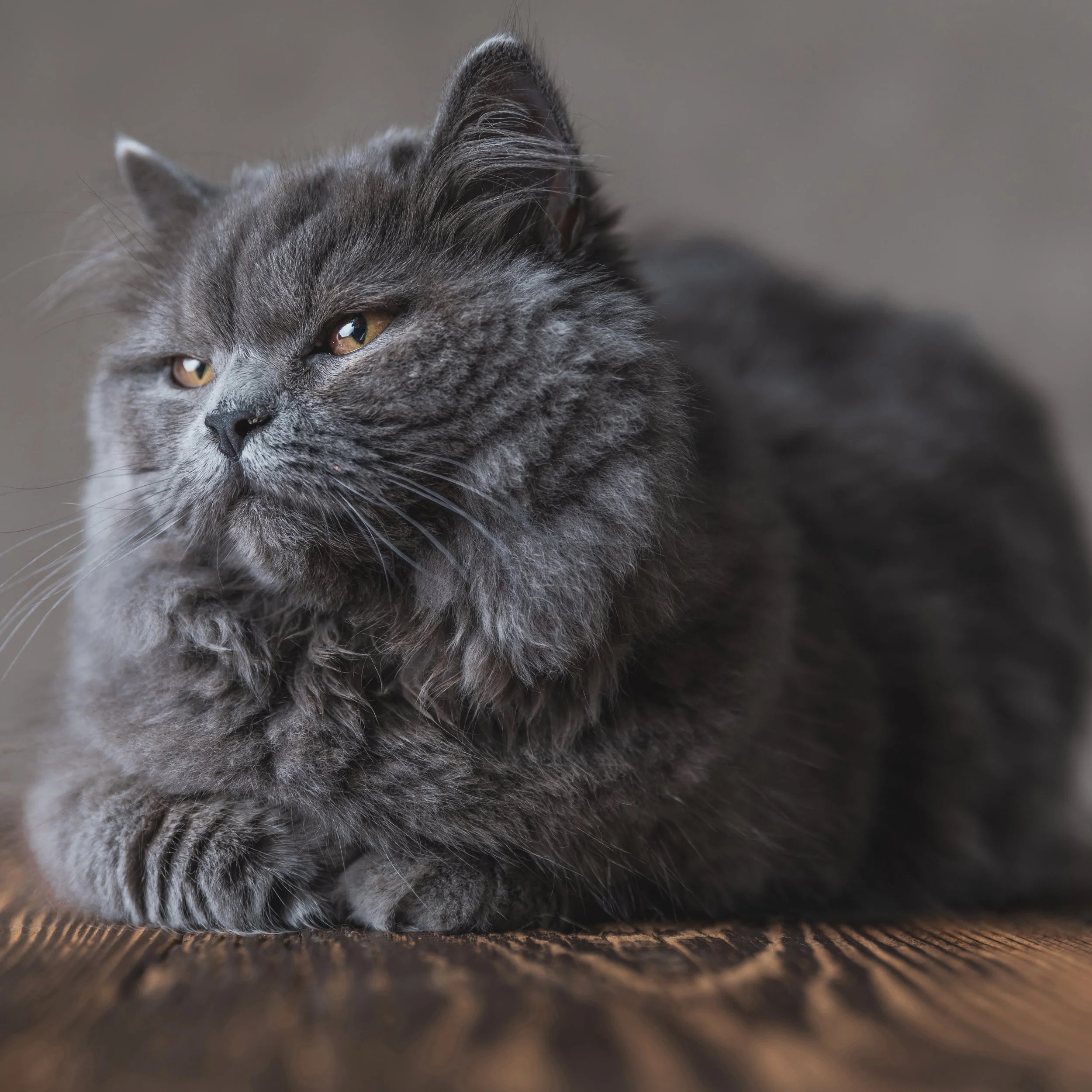
Solid Cherubim with Gold Eyes
Why These Cats Cannot Be Shown as Ragdolls
No major cat registry allows mink, sepia or solid cats to be shown under the Ragdoll name.
This includes organizations such as:
TICA (The International Cat Association)
CFA (Cat Fanciers’ Association)
FIFe (Fédération Internationale Féline)
GCCF (Governing Council of the Cat Fancy)
The reason is simple: they do not meet the Ragdoll breed standard.
Breed standards exist to preserve a breed’s defining traits. Allowing non-pointed cats with non-blue eyes into the Ragdoll ring would fundamentally change the breed.
In registries where they are accepted at all, mink, sepia and solid cats are placed into a separate category — Cherubim.
What Is a Cherubim?
Cherubim is the correct classification for cats that descend from Ragdoll lines but do not meet the traditional Ragdoll standard.
Cherubim may include:
Mink
Sepia
Solid
Non-standard colors or patterns
This classification allows these cats to exist and enter cat shows without redefining the Ragdoll breed itself. It acknowledges their heritage while maintaining the integrity of the Ragdoll standard.
Calling these cats Cherubim is not an insult. It is an accurate designation.
The History and Controversy
The controversy surrounding mink, sepia and solid cats largely stems from early breeding decisions and later marketing practices.
In the Early Days of the Ragdoll Breed, foundation cats included cats with varying genetics. As the breed developed and standards were formalized, breeders made conscious decisions about which traits defined a Ragdoll.
The colorpoint gene and blue eyes became non-negotiable and an essential part of the Ragdoll standard. However, some breeders continued producing non-pointed offspring, with eye colors other than blue, and marketed them as “Ragdolls” despite registry standards. Over time, this led to:
Confusion among buyers
Disagreements within the breeding community
Claims that standards are “outdated” or “too strict”
In reality, breed standards are not arbitrary. They exist to ensure consistency, predictability and preservation of a breed as it was intended.
Common Myths About Mink and Sepia Cats
“They are just a different type of Ragdoll.”
They are not. They are genetically and visually distinct and do not meet the Ragdoll breed standard.
“They are rarer and therefore more valuable.”
Rarity does not equal breed validity. Many non-standard traits are rare because they are intentionally excluded from breeding programs.
“Registries have accepted them as Ragdolls.”
Registries did create a place for these cats, not by changing the Ragdoll standard, but by establishing a separate category: Cherubim. Breed standards for Ragdoll cats have remained consistent because altering them would fundamentally change what a Ragdoll is. Instead of redefining the breed, registries preserved the Ragdoll standard and allowed mink, sepia and solid cats to be shown under the different name of Cherubim.
Ragdoll vs. Cherubim Clarification
What is a Ragdoll?
A Ragdoll is a pointed, blue-eyed cat meeting a specific written standard.
What is a Cherubim?
A Cherubim is a separate classification created for cats that do not meet the Ragdoll standard.
Is a Cherubim a Ragdoll?
While they share some ancestry, a Cherubim is not technically a Ragdoll since it doesn’t meet the Ragdoll breed standard. If Cherubim were Ragdolls, there would be no need for a separate name.
Why This Matters to Buyers
For pet owners, the most important thing is honesty.
When a buyer purchases a cat labeled as a “Ragdoll”, they should be receiving:
A cat that meets the written Ragdoll breed standard
A cat that can be registered and shown as a Ragdoll
Accurate information about genetics, appearance and expectations
Mislabeling mink, sepia or solid cats as Ragdolls undermines trust and damages the breed as a whole.
Appreciating Cats Without Redefining the Breed
Mink, sepia and solid cats can still be wonderful companions. Appreciating them does not require rewriting breed standards or misusing the Ragdoll name.
They already have their own category: Cherubim.
Preserving the Ragdoll breed means respecting its definition, protecting its standard and educating buyers with full transparency.
Call Them What They Are (They’re Still Adorable)
The truth about mink, sepia and solid Ragdolls is straightforward. They cannot be shown as Ragdolls, they do not meet the Ragdoll breed standard and they belong to their own classification. Recognizing this distinction is not about exclusion, but it is about preservation.
Clear standards protect adopters, breeders and the future of the Ragdoll breed. Honesty protects trust. And education ensures that every cat is valued for what it truly is, not what marketing gimmicks claim it to be.