
Understanding Heart Murmurs in Ragdoll Kittens – Should You Be Concerned?
Bringing home a Ragdoll Kitten is an exciting and joyful experience, but it can also come with moments of worry. Being told your new kitten has a heart murmur can be especially anxiety-provoking for owners who are unfamiliar with what that this Health Condition means. The significance of a heart murmur in a kitten, however, depends heavily on context, including the kitten’s age, overall health and the type of murmur detected.
While heart murmurs can occur in cats at any age, they are relatively uncommon in well-bred Ragdoll kittens and are usually benign when they do appear. This article provides balanced, experience-based education to help owners understand what heart murmurs are, how often they occur in Ragdoll kittens, when they are harmless and when further evaluation may be appropriate.
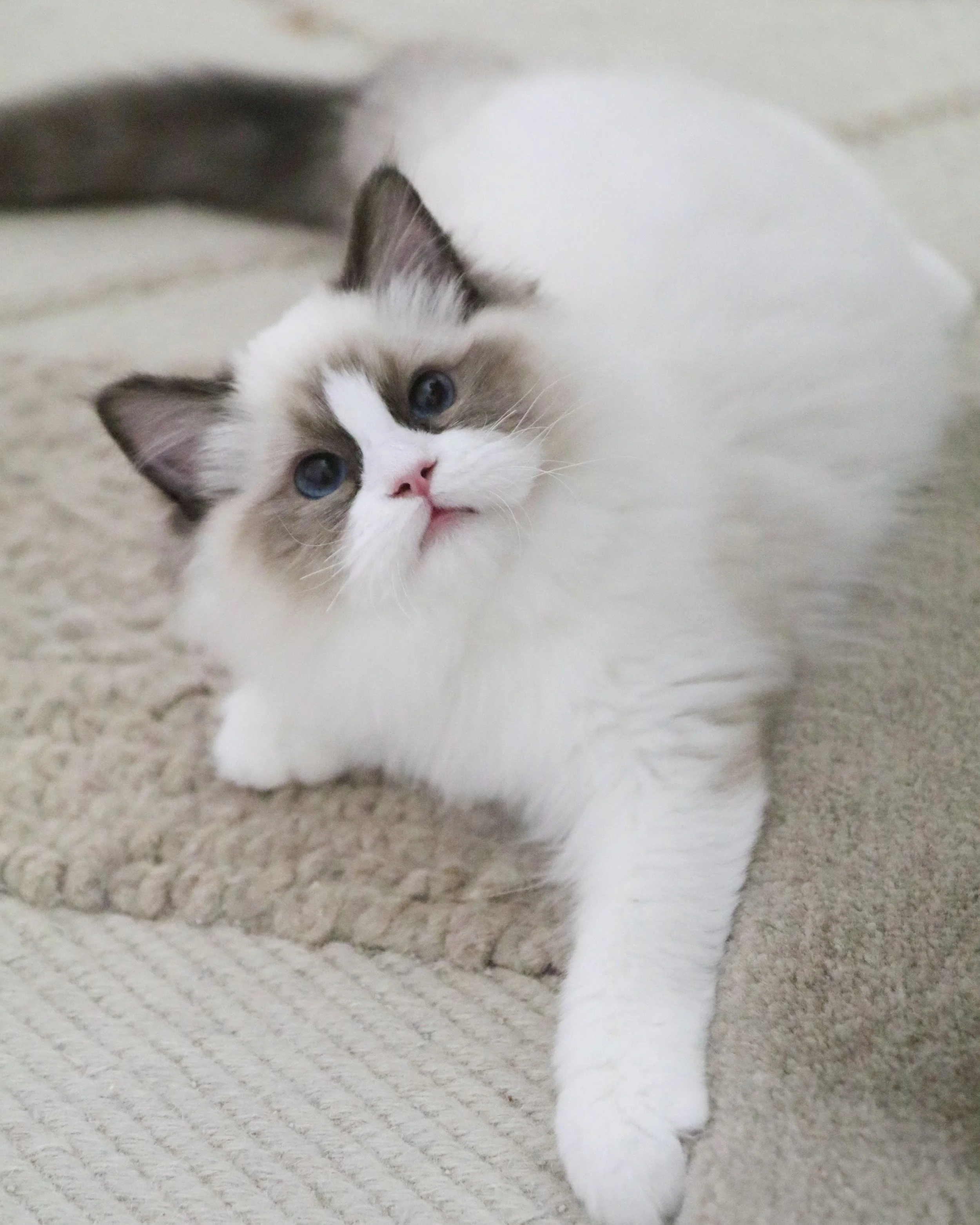
Photographed above is a healthy Ragdoll kitten. Most heart murmurs in Ragdoll kittens are benign and resolve as they grow.
What Is a Heart Murmur?
A heart murmur is not a disease, but a sound that a veterinarian hears while listening to the heart with a stethoscope. It is caused by turbulent or altered blood flow within the heart or major blood vessels.
Heart murmurs are typically graded on a scale from Grade I to Grade VI, based on how loud they are:
Grade I–II: Very soft murmurs, often only heard in a quiet room
Grade III–IV: Moderate murmurs, clearly audible
Grade V–VI: Loud murmurs, sometimes felt as a vibration on the chest wall
Why Heart Murmurs Can Occur in Kittens
In the general kitten population, veterinarians occasionally may detect what are known as innocent (or benign) heart murmurs. These murmurs result from normal developmental changes as a kitten’s cardiovascular system matures and are often temporary.
Several factors can contribute to a heart murmur in a kitten, including:
Rapid growth and changing blood volume
Thin chest walls that transmit sound more clearly
Mild anemia, which is common in young kittens
Increased heart rate during excitement or stress
In many cases, innocent murmurs resolve naturally as the kitten grows, typically by 6 months of age. While they are something to be aware of, their presence does not automatically indicate disease.
Innocent vs. Pathologic Murmurs
Understanding the difference between an innocent and pathogenic murmur is key.
Innocent (Benign) Murmurs
Usually Grade I–II
Often heard intermittently
Kittens show no symptoms
Normal growth, appetite and energy
Often resolve with age
Pathologic Murmurs
May be Grade III or higher
Persist or worsen over time
May be associated with symptoms such as poor growth, lethargy, difficulty breathing or fainting
Can be caused by congenital heart defects or cardiomyopathy
Most murmurs detected in young kittens fall into the innocent category, but monitoring is still essential.
Heart Murmurs vs. Genetic Heart Disease in Ragdolls
Ragdolls, like several other purebred cats, are known to have a predisposition to Hypertrophic Cardiomyopathy (HCM). This fact often adds to anxiety when a murmur is detected.
However, it is important to understand:
A murmur does not equal HCM
Many cats with HCM do not have a murmur at all
Many kittens with murmurs never develop heart disease
Responsible Ragdoll breeders reduce this risk through HCM Genetic Testing and conservative breeding decisions. These practices dramatically lower the likelihood of producing kittens with inherited heart disease, which is why murmurs are relatively uncommon in well‑managed breeding programs.
When Should You Be Concerned?
While most murmurs are benign, further evaluation may be recommended if:
The murmur is Grade III or higher
It persists beyond 6 months of age
The kitten shows symptoms such as:
Poor weight gain
Lethargy or exercise intolerance
Rapid or labored breathing
Fainting or collapse
In these cases, your Veterinarian may recommend an echocardiogram performed by a veterinary cardiologist to assess heart structure and function.
What Breeders and Veterinarians Typically Recommend
In many cases, the safest and most appropriate plan is watchful waiting.
This often includes:
Rechecking the murmur at future vet visits
Monitoring growth and activity levels
Avoiding unnecessary testing in very young kittens unless symptoms are present
For innocent murmurs, intervention is usually not required.
Should a Heart Murmur Raise Red Flags for Buyers?
A grade I or II murmur in an otherwise healthy, thriving kitten can occur, but it is not something most reputable Ragdoll breeders see regularly. When it does occasionally appear, it is often transient and resolves as the kitten matures. Ethical breeders disclose murmurs, track outcomes and provide guidance.
What should raise concern is a lack of transparency, refusal to provide veterinary records or dismissing symptoms entirely.
How to Support a Kitten With a Murmur
If your Ragdoll kitten has a murmur:
Keep regular veterinary appointments
Monitor appetite, growth and energy
Avoid excessive stress or overexertion
Follow your veterinarian’s recommendations
For most kittens with low-grade murmurs, the murmur disappears as they grow, and they go on to live perfectly normal, healthy lives
Heart Murmurs in Ragdoll Kittens: Purrs over Panic
Hearing that your Ragdoll Kitten Has a Heart Murmur can be unsettling, but it is important to remember that a murmur is a finding, not a diagnosis. Most murmurs in kittens are innocent (benign) and often resolve as the kitten grows, though ongoing monitoring is always wise.
Education, transparency and calm observation are key. By understanding the difference between harmless murmurs and those requiring further evaluation, and by working closely with your veterinarian and breeder, you can make informed decisions and enjoy your kitten with confidence. With this approach, owners can focus on cuddles, playtime and the loving companionship that Ragdolls are known for, without undue stress.