
Ragdolls and Routine: Why These Cats Thrive on Stability
If you have ever lived with a Ragdoll, you know that the Ragdoll Temperament is not accidental. They are not simply calm cats. Ragdolls are deeply people-oriented, emotionally intuitive and closely bonded to their families. Because of this, they thrive in homes that offer stability and predictability.
As a preservation breeder of traditional Ragdolls, I observe temperament patterns across generations of different Ragdoll cats. One trait consistently stands out to me: Ragdolls do best in environments where daily life follows a dependable rhythm. For Ragdolls, routine is not about control. Rather, it’s about feeling safe and secure.
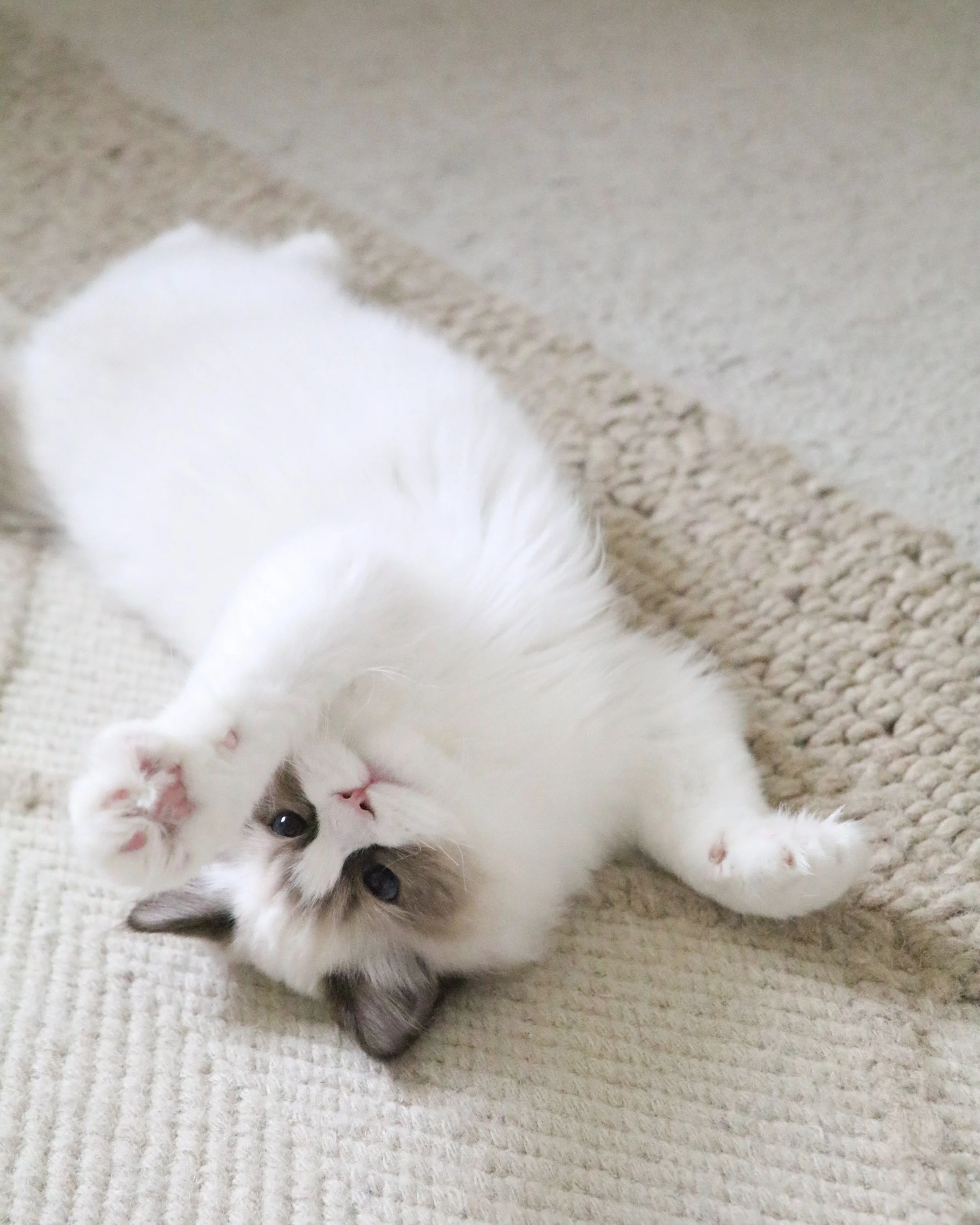
Ragdolls are naturally people-oriented, comfort-seeking cats who thrive in homes that provide stability, predictable routines and gentle, consistent connection, allowing their quiet, loving temperament to truly shine.
What Makes a Ragdoll Different?
The Ragdoll was intentionally developed to be a gentle, affectionate companion. From the beginning, temperament was prioritized above all else by Ragdoll breeders. The goal was to create a cat that was relaxed in handling, devoted to its family and steady in personality.
Ragdolls are typically:
Deeply attached to their owners and highly people-focused.
Calm and tolerant when handled appropriately.
Sensitive to emotional tone within the household.
Slow to mature both physically and behaviorally.
Unlike more independent breeds, Ragdolls do not simply coexist in a home. They follow their owners from room to room. They wait outside closed doors. They prefer sleeping near their people rather than in isolation. Because their bonds are so strong, changes in environment affect them more noticeably compared to some other breeds.
Why Stability Matters for Ragdoll Cats
Ragdolls are highly observant cats. They learn household patterns quickly and rely on those patterns for reassurance. They notice when meals are served, when lights go out and when family members leave or return home.
When those patterns remain consistent, Ragdolls settle into homes with confidence. When routines change frequently or abruptly, they may display stress-related behaviors.
Stress in a Ragdoll may present as:
A decreased appetite that appears suddenly and without medical cause.
Increased vocalization, especially when searching for their owner.
Clinginess that seems anxious rather than simply affectionate.
Hiding behavior that is out of character.
Inconsistent litter box habits triggered by environmental disruption.
Not every Ragdoll reacts strongly to change. However, as a breed, they generally prefer calm structure over unpredictability.
The Ragdoll’s Emotional Connection to Routine
Because Ragdolls bond so closely to their families, their sense of stability is tied directly to human behavior. They feel secure when they can anticipate what happens next. Consistent feeding times communicate reliability. A predictable bedtime routine creates a sense of safety. Regular affection and interaction reinforce their place within the family. Routine becomes reassurance. For a breed that thrives on connection, predictability strengthens their devotion and trust.
The Benefits of Routine for Ragdolls
Routine offers more than structure; it actively supports both the physical and emotional well-being of a Ragdoll. When a cat understands what to expect from its day, stress levels tend to remain lower and overall emotional stability tends to improve.
A predictable daily rhythm helps regulate important biological and behavioral patterns. For example:
Feeding at consistent times helps support healthy eating habits and reduces anxiety that can occur when meals are unpredictable.
Stable sleep and activity schedules help the cat conserve energy and feel secure within the home environment.
Regular, gentle interaction helps the Ragdoll understand when attention and companionship will be available.
A structured environment makes it easier to distinguish between normal behavioral responses and potential health or stress-related changes.
Familiar surroundings and consistent placement of resources such as food bowls, litter boxes and resting areas reduce uncertainty.
Routine also strengthens the emotional bond between Ragdolls and their families. When affection, playtime and interaction occur in a dependable pattern, the cat learns that companionship is a reliable and safe part of daily life.
Early Development and Structured Beginnings
This preference for stability begins in kittenhood. Responsible breeders raise Ragdoll kittens in environments that are structured and consistent.
Early life typically includes:
Regular feeding schedules that occur at the same times each day.
Daily handling that is gentle and repetitive to build trust.
Gradual exposure to common household sounds in a controlled way.
Calm socialization that avoids overwhelming stimulation.
These early routines help shape confident adults. When kittens transition into their new homes, maintaining similar feeding and sleeping schedules significantly eases adjustment.
Routine does not mean rigidity. It means thoughtful consistency that builds confidence.
Ragdolls in Active Homes
Ragdolls are Not High Maintenance Cats and can absolutely still thrive in busy households. However, activity should still have structure. A home with children, work schedules and normal daily movement is not a problem if it follows a predictable pattern.
Successful active homes typically include:
Children who are taught respectful, gentle handling.
Feeding and litter routines that remain consistent.
A quiet space where the cat can retreat when needed.
Gradual introductions to new people or changes.
Constant travel, rotating caregivers or chaotic daily schedules can create stress since the Ragdoll never has time to settle into a rhythm.
Ragdoll Temperament Compared to Other Breeds
Different breeds respond to change in different ways. Temperament is not accidental in purebred cats. It is shaped intentionally over generations through selective breeding and those differences become especially visible when you look at how breeds handle stimulation, disruption and routine.
For example, the Bengal is widely known for its energy and drive. Bengals often seek stimulation, novelty and physical activity. They tend to explore boldly, investigate new objects immediately and thrive in environments where there is frequent Interaction and Enrichment. A constantly changing environment may not unsettle a Bengal in the same way it might affect a more emotionally sensitive breed. In fact, many Bengals appear to enjoy new challenges and dynamic surroundings.
The Siamese is another example of a breed with a distinctly different response pattern. Siamese cats are typically vocal, socially assertive and energized by frequent engagement. They often demand attention and insert themselves into activity. While they bond deeply with their owners, they may express dissatisfaction loudly and clearly if their needs are not met. Many Siamese adapt well to active households because they actively participate in the commotion.
Ragdolls, in contrast, are comfort-oriented rather than stimulation-driven. Their temperament is rooted in steadiness, gentleness and emotional attachment. They do not generally crave high levels of novelty or constant environmental change. Instead, they prefer familiarity. They prefer knowing where their food bowl sits, where their litter box remains and where their favorite resting place will be at the end of the day.
Understanding these differences helps recognize that each breed was developed with a particular temperament in mind. The Ragdoll was developed to be a calm, devoted companion. Stability allows that intention to be fully expressed.
Signs of a Secure Ragdoll Cat
When a Ragdoll feels safe, the difference is visible.
A secure Ragdoll will often:
Relax fully on their side or back without tension.
Maintain a steady appetite and healthy grooming habits.
Engage in playful, balanced behavior.
Show affection that feels calm and confident rather than anxious.
Move comfortably throughout the home without excessive hiding.
Security allows their true temperament to shine.
Preserving Ragdoll Temperament Through Environment
Preservation breeding is not only about physical traits or written Breed Standards. It is also about protecting temperament. The Ragdoll’s trusting and relaxed nature has been carefully maintained through selective breeding over the course of many decades. However, genetics alone cannot guarantee expression. Environment matters. Stability supports the very traits that define the Ragdoll breed.
The Best Home for a Ragdoll Is a Predictable One
Owning a Ragdoll is not about creating a perfect household. It is about creating a consistent one. Small, repeated patterns, such as feeding at reliable times, offering calm affection, maintaining familiar spaces and allowing the cat to understand the rhythm of the home make a meaningful difference in how a Ragdoll feels and behaves.
These cats do not require chaos or novelty to be happy. They are not searching for constant entertainment. What they want most is connection. They want to know where they belong, who their people are and what to expect from the world around them.
When breeders preserve temperament through careful selection and owners support that temperament through stability, the result is the Ragdoll as it was meant to be: a devoted, gentle and quietly extraordinary companion. In the end, the Ragdoll’s greatest happiness is not found in complexity. It is found in consistency, kindness and the simple comfort of knowing that tomorrow will look much like today.