
Knead to Know – Why Ragdoll Cats Make Biscuits with Their Paws
If you’ve ever watched a Ragdoll Cat slowly and deliberately pressing their soft paws into a blanket, pillow or even a lap, then you’ve probably felt your heart melt! This charming behavior, affectionately known as “making biscuits,” is one of the most endearing and recognizable traits of the Ragdoll cat breed. From the rhythmic pawing to the gentle stretching, it’s impossible not to smile watching these gentle giants at work. But why do Ragdolls knead? Is it purely instinct, or is there deeper meaning behind those adorable movements? In this post, we’ll explore the science, history and irresistible charm behind Ragdoll Biscuit-Making, uncovering why this behavior has captured the hearts of cat lovers everywhere and why it’s considered such a signature trait of these affectionate, laid-back cats.
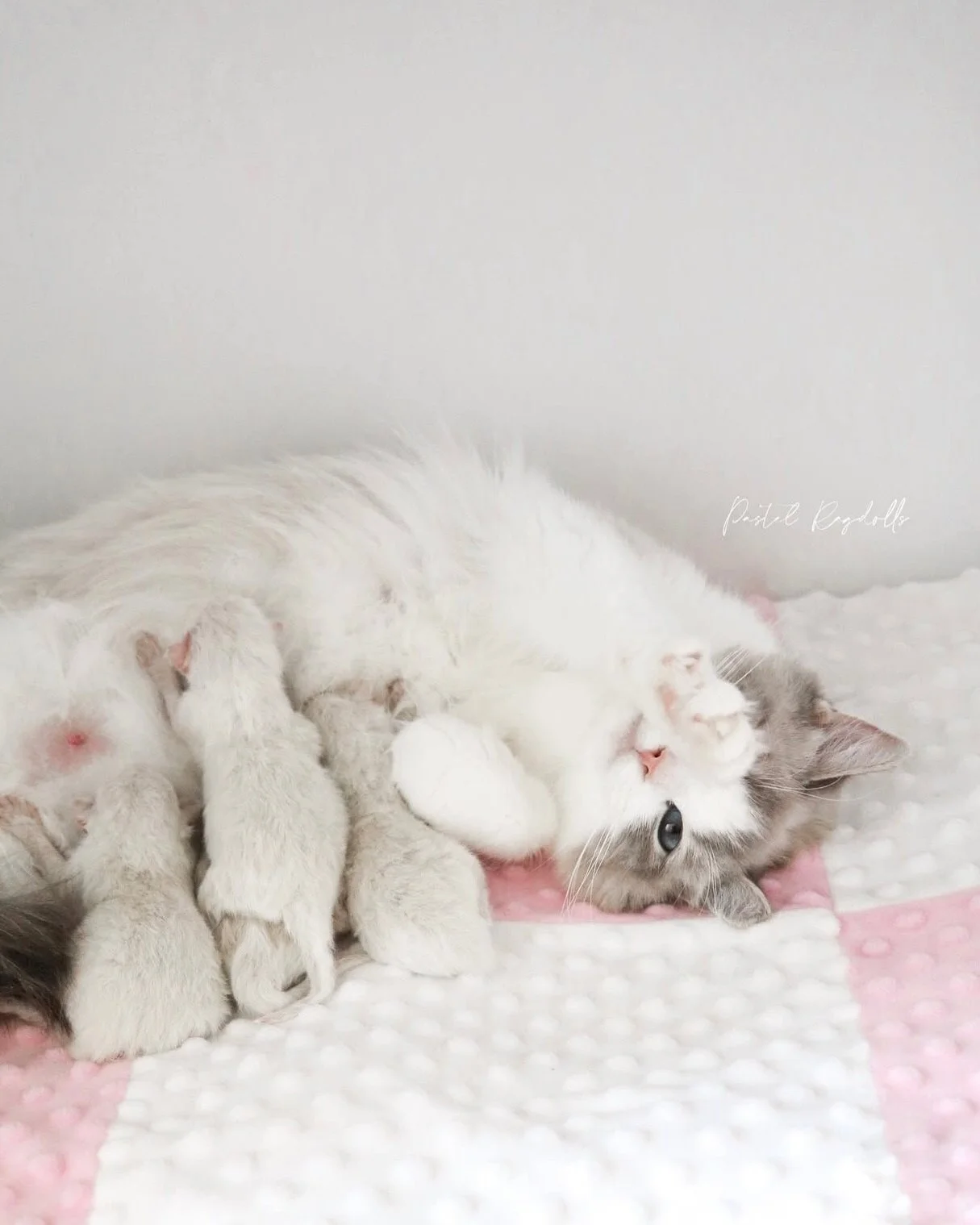
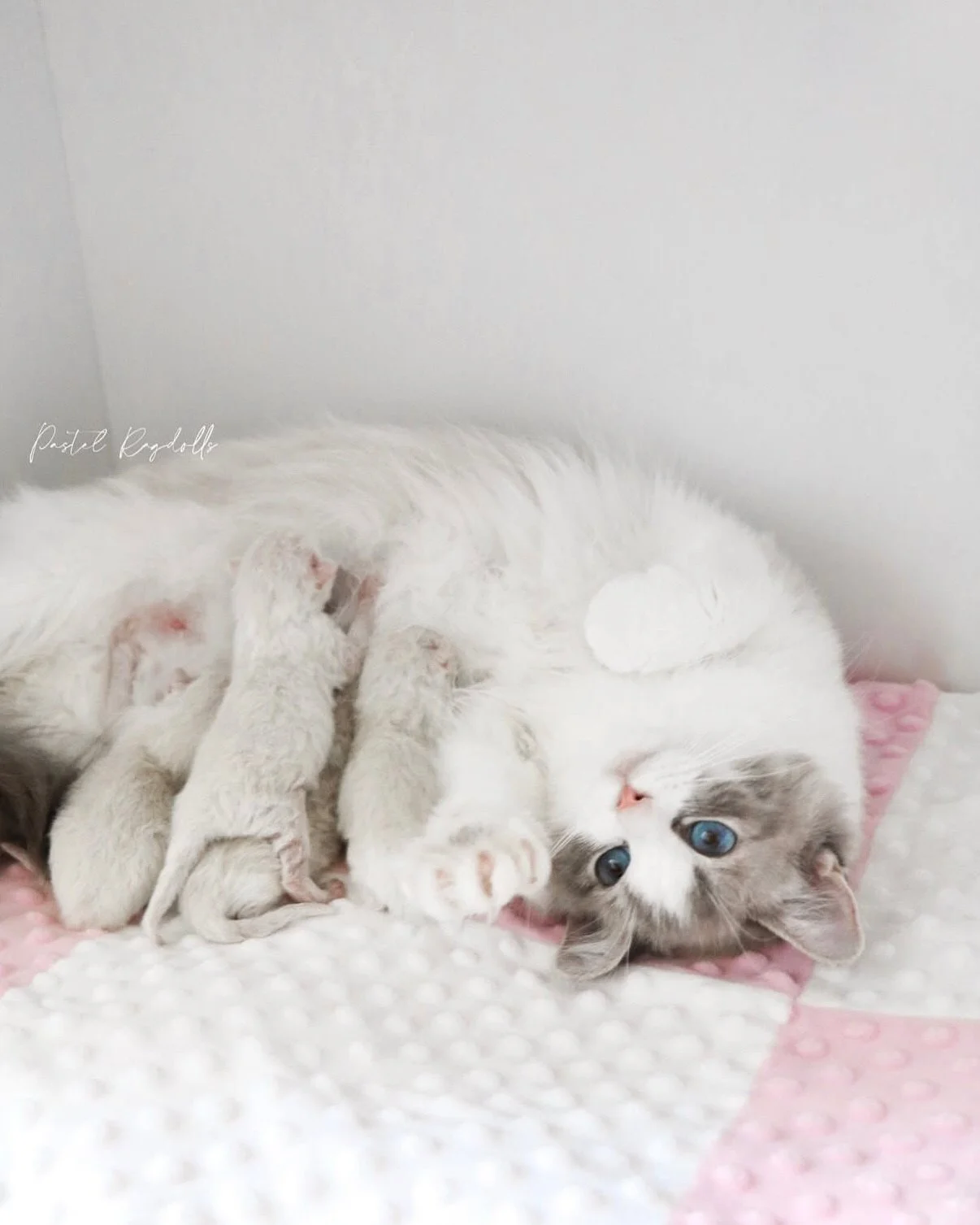
One of our adorable mama Ragdoll cats making air biscuits as she nurses her babies. ♡
What Does “Making Biscuits” Mean?
The term “making biscuits” comes from the rhythmic motion cats make when they move their paws alternately, resembling a baker kneading dough. While the behavior is universal among domestic cats, Ragdolls seem particularly fond of it.
This motion involves:
Alternating front paws
Gentle pressure into blankets, pillows, your lap or even the air
Soft, repetitive kneading with claws often extended
It’s not just cute, it’s a natural instinct rooted in kittenhood.
The Origins of Biscuit-Making
Ragdolls, like all cats, learn this behavior as kittens. While nursing, newborn kittens knead their mother’s belly to stimulate milk flow. For many cats, this comforting, nurturing action becomes a habit and continues into adulthood.
For Ragdolls specifically:
Their calm, Affectionate Nature makes them more likely to knead when they’re relaxed.
Adult Ragdolls often knead on their favorite humans, signaling comfort, trust and bonding.
Kneading is a “happy cat” behavior. Most Ragdolls will “make biscuits” before settling down for a nap or curling up with their owner.
Video Compilation: Ragdolls Making Biscuits
To celebrate this adorable habit, we’ve put together a short video compilation of Ragdoll cats and kittens at Pastel Ragdolls making biscuits. Watch these gentle giants in action as they knead, stretch and show just how sweet this behavior can be:
Whether they’re kneading blankets, soft beds or laps, each clip captures the calm, loving personality that makes Ragdolls such special companions.
Why Do Ragdolls Knead?
There are several reasons your Ragdoll might be making biscuits:
1. Comfort and Security: Kneading is a self-soothing behavior. Ragdolls often knead when they feel safe and secure, whether it’s on a soft blanket, their favorite bed or Sitting on Your Lap.
2. Marking Territory: Cats have scent glands in their paws. When they knead, they leave their scent behind, marking the area as their own. Ragdolls may knead your lap or a favorite blanket as a way of saying, “This is mine and you’re part of my family!”
3. Stretching Muscles: Kneading isn’t just cute, it’s also functional. The motion stretches the cat’s paws, legs and shoulders, keeping them limber and relaxed. For a large, muscular breed like the Ragdoll, this is a gentle way to stay limber.
4. Expression of Affection: Ragdolls are famously affectionate, and kneading is one way they show love. If your Ragdoll presses its paws into your lap while purring, it’s the ultimate “I love you” gesture in cat language.
Why Ragdolls May Knead More Than Other Breeds
Many cats enjoy kneading from time to time, but Ragdolls especially have a reputation for this adorable behavior. Their frequent biscuit-making isn’t just instinct, it’s closely tied to their personality and the way they interact with their humans. Ragdolls are naturally affectionate, Floppy and gentle. Kneading is one of the many ways they express comfort, trust and happiness. While other breeds may knead occasionally, Ragdolls often turn it into a regular habit, showing off their relaxed, loving nature.
Some of the key reasons Ragdolls knead more than other breeds include:
Calm, affectionate personalities
Love of human companionship
Comfort-seeking tendencies
Relaxed, trusting nature
In short, Ragdolls knead because they feel safe, loved and content. It’s a perfect reflection of their gentle, people-oriented personalities.
Do All Ragdolls Make Biscuits?
While kneading is a signature behavior for many Ragdoll cats, not every Ragdoll does it. Just like humans, each Ragdoll has a unique personality and their tendency to make biscuits can vary. Some Ragdolls knead constantly on blankets, pillows or laps, while others may only do it occasionally or in more subtle ways.
Factors that influence kneading include:
Comfort and Bond: Ragdolls who feel safe, secure and bonded to their humans are more prone to kneading.
Personality: Calm, affectionate Ragdolls are more likely to knead frequently.
Age: Kittens may knead more often due to their nursing instincts, while adult Ragdolls may knead less.
Even if a Ragdoll doesn’t make biscuits regularly, it doesn’t mean they aren’t affectionate or trusting. They may just express their love in other ways, like cuddling, following you around or gentle purring.
Tips to Encourage Healthy Kneading
While kneading is a completely normal and healthy behavior for Ragdolls, there are a few simple ways to encourage it safely and make it enjoyable for both you and your cat. By providing the right surfaces, keeping claws maintained and responding with gentle affection, you can help your Ragdoll continue this adorable habit without causing damage to furniture (or Accidental Scratches). Here are some practical tips to support healthy kneading:
Offer soft surfaces: Blankets, pillows and plush beds are often irresistible to Ragdolls.
Trim nails regularly: Keeps kneading safe for both you and your cat.
Positive reinforcement: Give gentle pets, treats or a soft voice when they knead your lap to associate the behavior with affection and bonding.
Don’t discourage: Kneading is natural and a sign of trust!
Knead We Say More? Celebrate Your Ragdoll’s Sweet Side!
Watching a Ragdoll Kitten make biscuits is more than just a cute moment. It’s a window into their affectionate, trusting and playful personality. From their newborn days nursing with their mother to the gentle pawing they share their favorite humans as adults, kneading is a behavior that reflects comfort, bonding and pure feline joy. So next time your Ragdoll cat curls up in your lap and starts pressing their paws, sit back, relax and enjoy one of the many small, heartwarming ways these sweet cats can express their love.